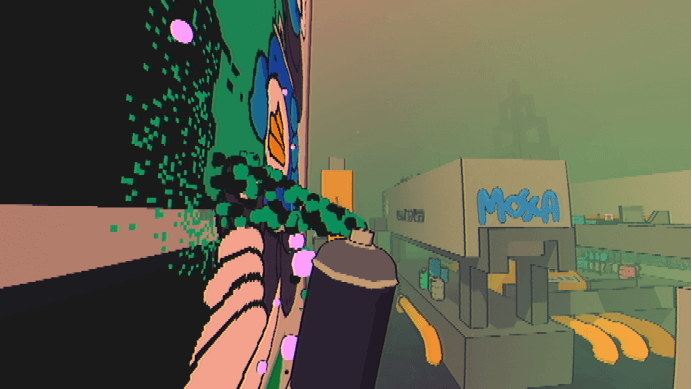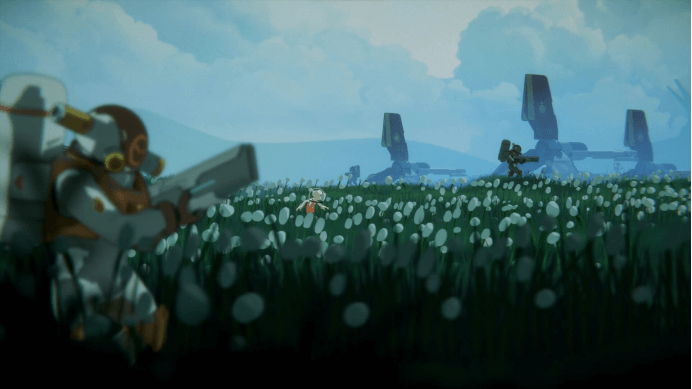
When I first crawled out of the ventilation pipe and stood in the shadow of the huge, rusty Mickey Mouse’s ears, the rain just stopped. The sunlight shines through the broken neon tubes and casts colorful light spots on the stagnant ground. The child I played has no name, wearing a ragged hoodie and barefoot. Behind me is the cruel wilderness, and in front of me is this abandoned theme park called “Great Paradise”. And what I want to do is just to move forward. There was no line at the beginning of _The Cub_, but this scene said everything: civilization is dead, but its toys are still standing.
Moving is the most natural thing. Running, jumping and climbing, the child’s body is as flexible as a small animal. I walked through the fallen roller coaster track, and there was still half of the carriage hanging on the track; I climbed into the wreckage of the pirate ship, and the cabin was stuffed with rotten plush toys; I slipped into the dark haunted house, and the flashlight illuminated the dried “blood” on the wall — it was actually paint, but it was more disturbing than real blood. The puzzle of platform jumping is not difficult. It is more to guide me to see: see the skeleton stuck in the rotating teacup still maintaining the posture of drinking tea, and watch the countless smiling doll heads in the gift shop slowly rot on the shelf. Every step tells me that this used to be a place to make happiness, and now, happiness has become the strangest relic.
The most powerful thing about the game is its “environmental storytelling”. I don’t need to read the log or listen to the recording. The clue is right in front of us: children’s-sized gas masks are scattered at the door of the candy house; the passage leading to the underground bunker is hidden behind the closed ice cream shop; a cockpit of the Ferris wheel has been transformed into a watchtower, and the telescope is still facing the ruined city in the distance. The legacy of consumerism has become extremely clear here — those huge trademarks, those slogans “I wish you a magical day”, and those cartoon images designed to sell more toys have all become empty mockery after the end of the world. The most ironic thing is that the defense system of this park is still working. Laser traps and automatic battery are ruthlessly chasing me, the last “tourist”, as if it is still stubbornly protecting an experience that no one needs for a long time.
But I’m not alone. Occasionally, a woman’s voice came from the walkie-talkie. She claimed to be my “guide” and observed and guided me on the tower in the distance. Her tone was gentle and tired, telling me where to go and warning me where there was danger. We never met, but her voice became my only anchor in this strange paradise. Who is she? Why do you help me? These questions accompany me every jump and hide like background sound. Until later, I saw her on the monitoring screen of the control center — and I also saw myself, a small figure moving in the huge ruins. At that moment, I suddenly felt a small but strange connection: in this empty world, there are still eyes following another person’s journey.
Finally, I crossed the core of the paradise and came to the tallest fairy tale castle. There are no princesses or treasures in it, only a huge central controller that has stopped working. The guide’s voice became clear here, and she finally told the truth: the paradise was once part of the doomsday plan, a refuge for the rich, but it failed. And I was an “accident”, a variable that the system failed to clear, and the only “error” that survived this failure. But she chose to protect this mistake and guide me through the ruins that she had managed with her own hands. In the last part of the road, I walked very slowly. Every step is like stepping on the corpse of civilization and someone’s remorse.
When leaving the castle, the sun was rising from the gate of the park. The guide’s voice said, “Let’s go, don’t look back.” I ran forward, through the gate, and into the dazzling sunshine outside. There is no ending animation and no subtitles. The screen gradually turned white, leaving only me and my footsteps.
After exiting the game, I sat in the dark, and there seemed to be the sound of the wind in the paradise in my ears. _The Cub_ didn’t give me a fierce battle or a complicated plot. It gave me a long and quiet gaze. Let me stare at the gorgeous cages we built for happiness and the consumerist ghosts who still refuse to disperse after the disaster. And the child, the child running barefoot in the ruins, didn’t know anything. He just ran forward, leaving the whole era behind.